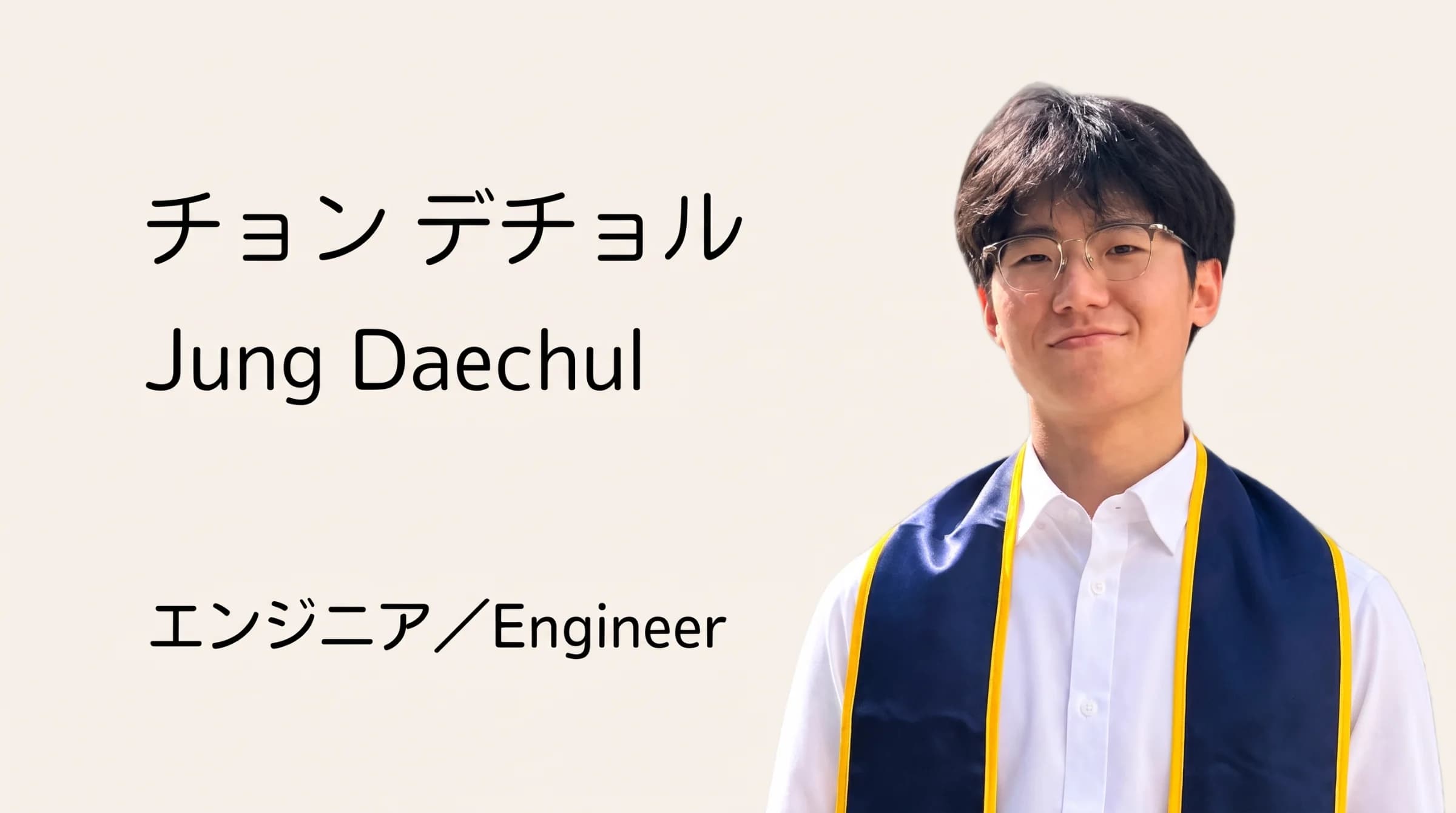
Background
Jung earned a bachelor's degree from the University of California, Berkeley, and a master's degree from Vanderbilt University. In graduate school, Jung worked on research in medical AI and robotics while also overseeing the teaching assistants in data science.
We asked Jung about what first led to a career in research and the beliefs that guide that ongoing exploration.
A Researcher's Philosophy: "Keep Taking On Questions That Have No Answers."
Q. Was there a particular experience that inspired you to become a researcher?
A. My journey from academia to industry has been driven by a passion for applying research to real-world problems. What fascinates me most about research is the openness to define problems that have no established answers and discover ways to solve them. The moment was when I realized that I want to contribute to new and hard problems which are never defined and have no answer yet. It means solutions depend on how I define the problems and how to solve those. I think it is the most fascinating part of the research, even though it is the part that makes me and the research hard things.
Q. How do you approach your research?
A. Research is not something I do only at work; it is a continuous process of thinking, questioning, and exploring possibilities. Good ideas do not come often and are not the things found when I want. It comes when I get used to it. Hence, the way that I can think and approach research is always thinking about the problem regardless of places and what I am doing.
Q. How do you think about failure?
A. Failure is not about achieving the wrong result, but about knowing I could have given more than I did. Every results of some actions or experiments coming from ideas cannot always success. Sometimes can success and sometimes can fail. But the failure I define is when I think that I did not put my effort and did my best as much as I define. It is the failure and most regretful point whatever I do.
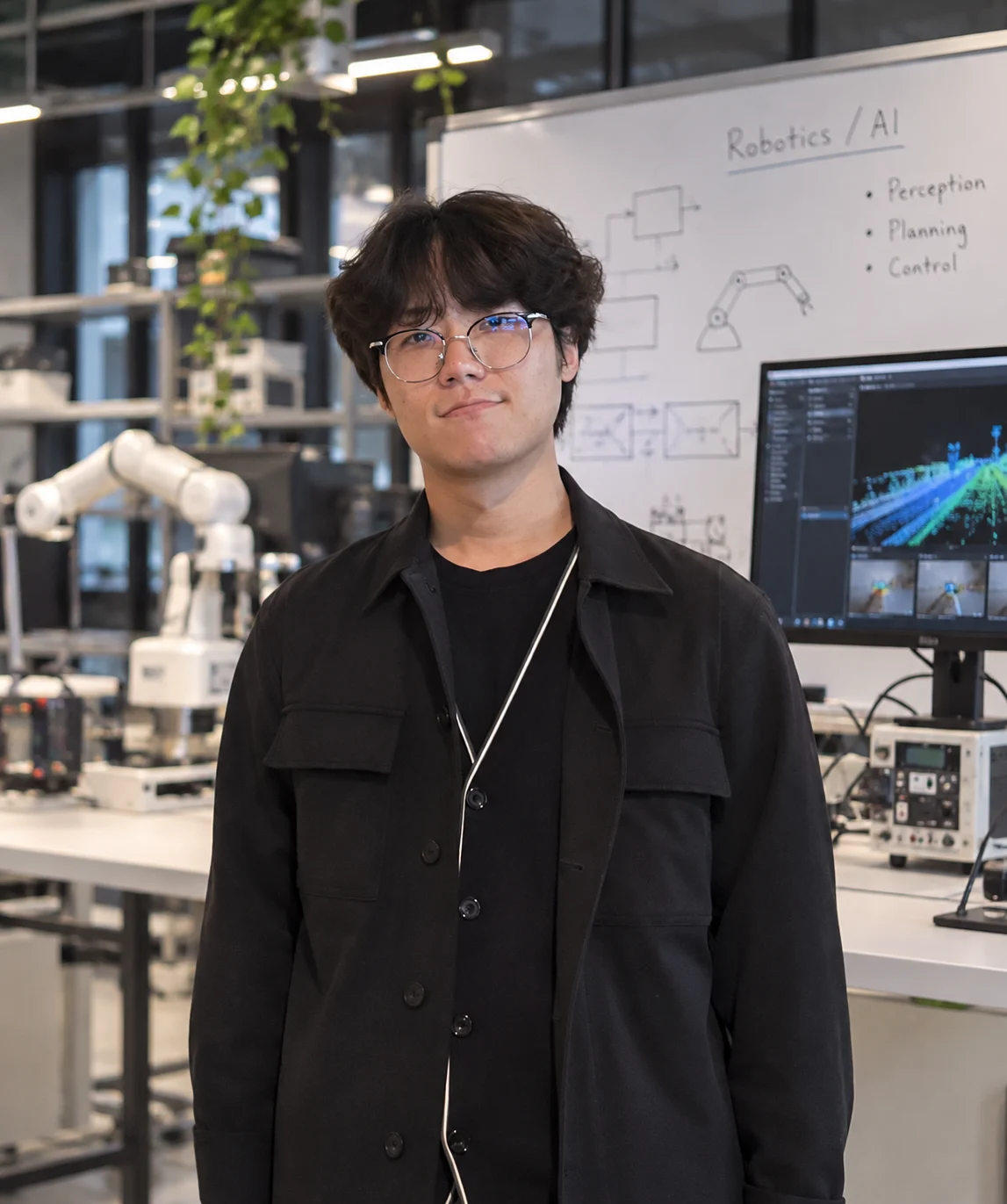
Bringing New Possibilities to Japan's Technological Strength.
Q. What has been one of the most surprising or memorable discoveries you've made in your research?
A. I've come to see that building a solid foundation doesn't just solve the problem in front of you. It also opens doors to new possibilities you never imagined at the start. Every day at Yodo Labs brings new discoveries and lessons for me. Getting feedback from teammates and sharing opinions and ideas with each other inspires me a lot every day. What has stayed with me most is discovering that building a strong foundation or starting point can lead to unexpected new directions and value. A single research result or idea doesn't stand on its own. It can lead to other applications or help solve problems no one anticipated at first. That widening of possibilities is what I find exciting about moving research and business forward.
Q. What inspired you to work for a Japanese company?
A. I have always admired Japan's commitment to precision, depth of thought, and pioneering innovation—qualities I believe are essential in the rapidly evolving AI era. I think that Japanese industries and society are the representation of deep dive attitudes and being frontiers with extremely detailed thoughts as history has proved. As the era of AI where everything goes too fast, I think this attitudes and goal is necessary to pursue better results, which I have been inspired and want to work with.
Q. What potential and opportunities do you see in Japanese industries and society?
A. Japan's strong technological foundations create opportunities not only to advance existing industries but also to pioneer entirely new possibilities. Japan has made many foundational technologies, which can be other foundational steps that can go further than others. Within these industries and society, we can deal with more advanced technologies and opportunities to think about due to the environments where we are.
Q. What keeps you going when things get hard?
A. What keeps me going is the determination to leave no room for regret and the belief that every challenge brings something invaluable. As I mentioned, even though every result cannot be something that I want, the fact that I did not do my best and put in my best efforts makes me feel worse. Keep this in my mind as a reminder and what the results bring to me after the hard time is invaluable in all perspectives.
Innovation Happens When Different Perspectives Meet.
Q. What do you admire most about your team members, and what qualities do you value in the people you work with?
A. I believe the greatest strength of a team lies in its willingness to listen, respect different perspectives, and challenge ideas constructively together. Even though we are from different countries and bring different values, the most valuable and admirable quality is being ready to listen and think together about what the other person brings, whatever it is. Regardless of culture, I think this is the hardest part of a relationship. But all team members are open to others’ ideas, acknowledge it and think together about solutions. Constructive feedback is also the other valuable part.
Q. What kind of future do you hope to create through Yodo Labs?
A. What keeps me going is the determination to leave no room for regret and the belief that every challenge brings something invaluable. As I mentioned, even though every result cannot be something that I want, the fact that I did not do my best and put in my best efforts makes me feel worse. Keep this in my mind as a reminder and what the results bring to me after the hard time is invaluable in all perspectives.